


Speaker(s)

Mark Palfalvi

Gyorgy Szilagyi
Mark Palfalvi
Gyorgy Szilagyi
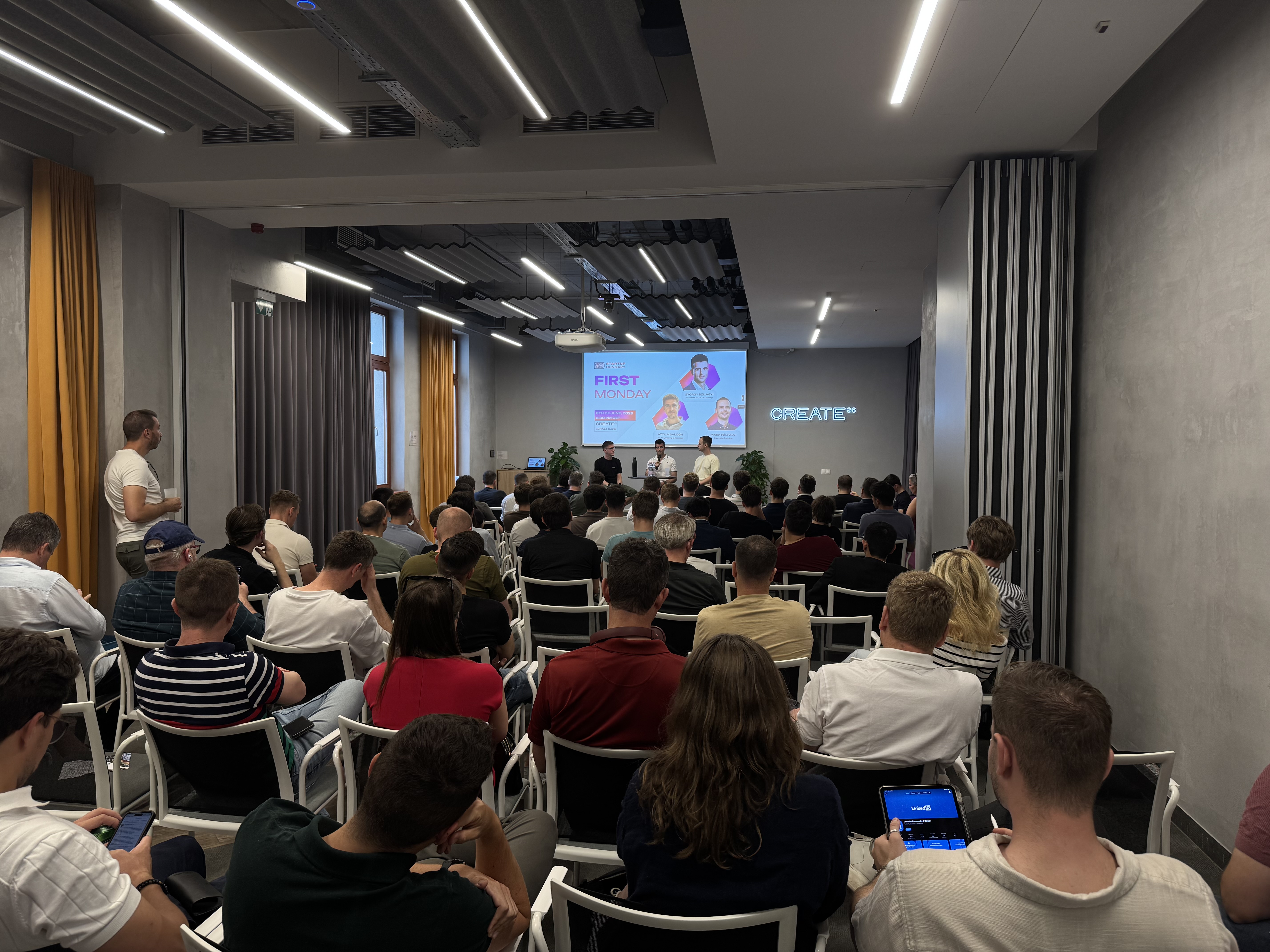
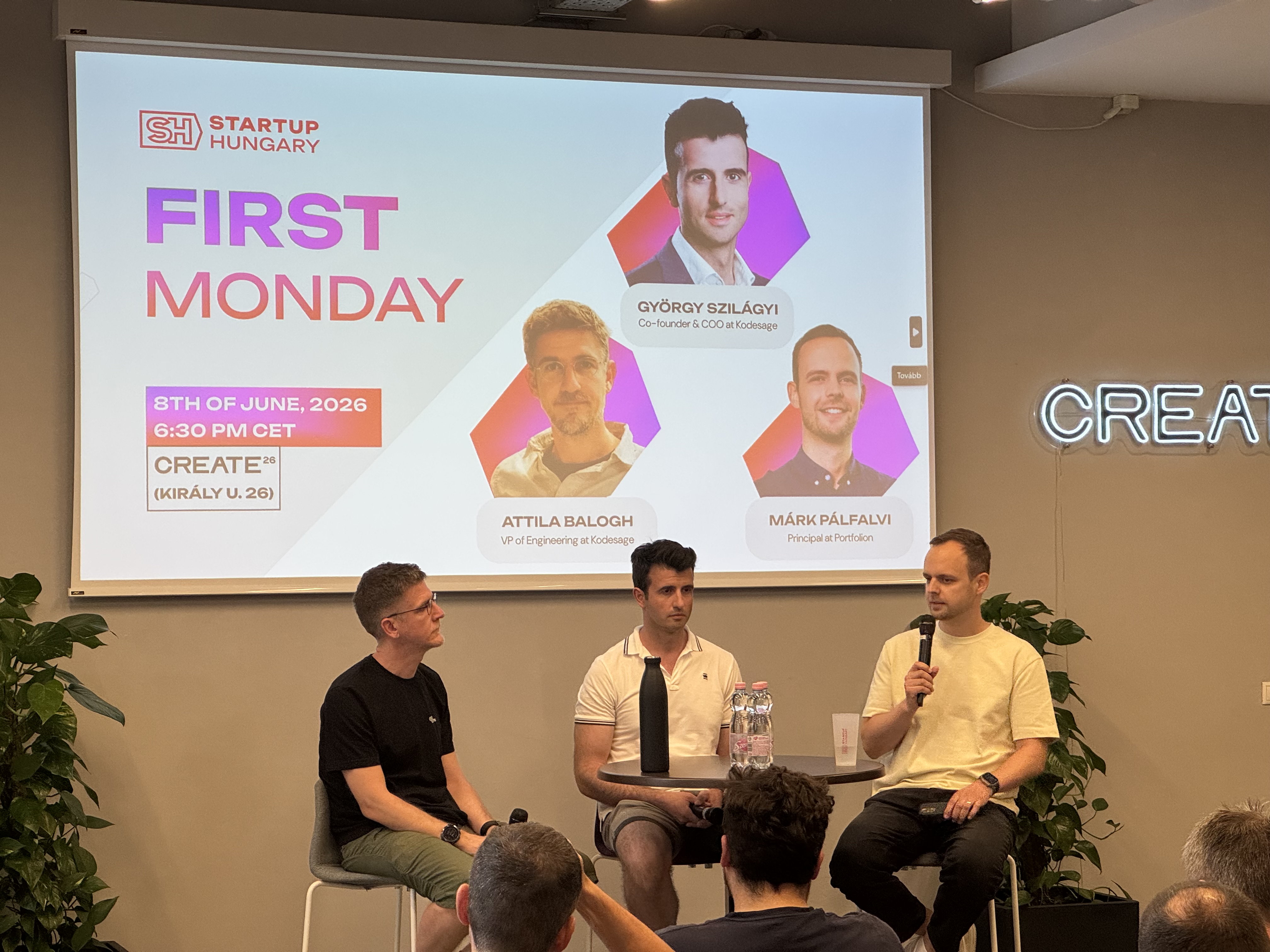
In June’s First Monday we welcomed the Kodesage team for a conversation on legacy systems, on-premise AI, and what it takes to build for customers where security, compliance, and continuity are not nice-to-haves — they are the baseline.
The timing made the evening especially relevant. A little over a year ago, Kodesage joined us after announcing their €2.3M pre-seed round led by Portfolion. Since then, the company has moved fast: growing the team, landing enterprise customers, sharpening the product, and most recently announcing a $6.6M Seed round led by VentureFriends, with Portfolion joining again.
But the night wasn’t just about the funding. It was about the problem behind the momentum: mission-critical software that has been running for decades, often with incomplete documentation, shrinking internal knowledge, and limited room for experimentation. In banking, energy, government, logistics and other regulated industries, “move fast and break things” is simply not an option.
Together with Gyorgy Szilagyi, co-founder and COO, Attila Balogh, VP of Engineering, and Mark Palfalvi from Portfolion, we went behind the scenes on how Kodesage is building AI for these environments. We talked about why cloud-based copilots are not enough when code and data cannot leave the building, what engineering teams actually need beyond code generation, and how an on-premise AI system can help enterprises understand, document and modernize complex legacy codebases.
The conversation also dug into the realities of selling enterprise AI: long cycles, high trust requirements, strict deployment constraints, and the importance of proving value in environments where mistakes are expensive. What emerged was a sharper picture of a company building in one of AI’s less glamorous but potentially most urgent markets.
The evening closed with a look at what comes next for Kodesage as they scale from Hungary toward global enterprise customers — and a clear sense that some of the most important AI companies will not be built around flashy demos, but around solving painful, deeply technical problems that large organizations can no longer ignore.
Gallery


worthy updates


